
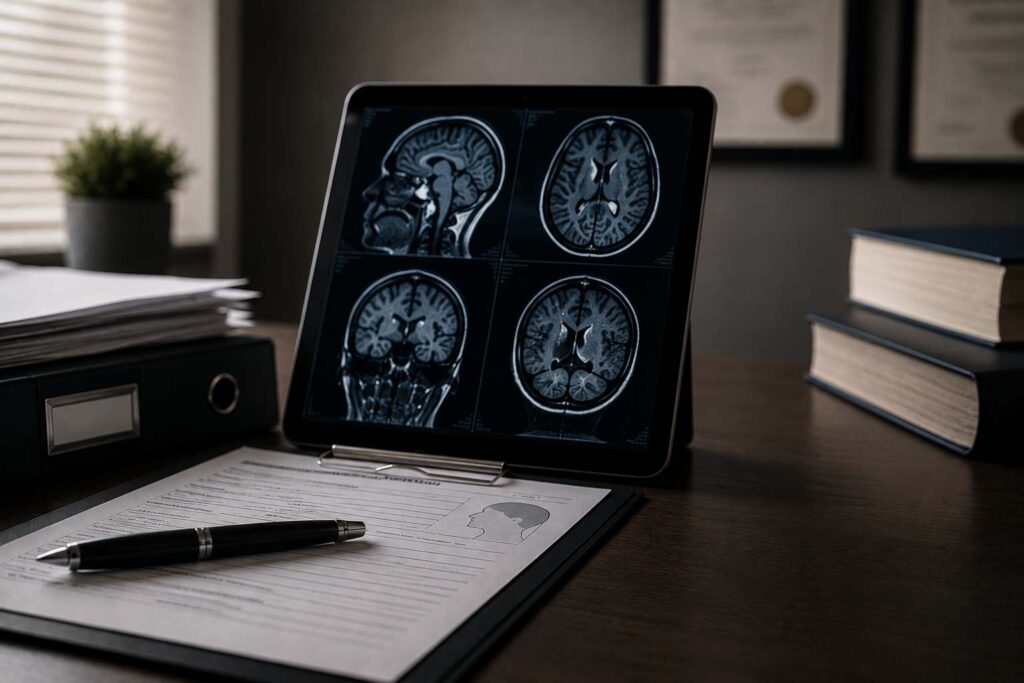
Traumatic brain injuries are often misunderstood, especially when symptoms are not immediately visible. Headaches, memory issues, and difficulty concentrating may develop over time, making it harder to connect the condition to a specific event. Because of this, insurance companies sometimes question whether the injury is as serious as described.
Understanding how to prove a traumatic brain injury to insurance companies can help strengthen a claim and reduce uncertainty during the process. Careful documentation, consistent medical care, and clear evidence often make a meaningful difference. If you are struggling to prove the impact of a traumatic brain injury after an accident, contact us today at (509) 315-4219 to discuss your situation and learn how we can help protect your rights and strengthen your claim.
Key Takeaways:
- Proving a traumatic brain injury to insurance companies usually requires consistent medical records, documented symptoms, and evidence showing how the injury changed daily life.
- Strong evidence for a TBI claim may include emergency records, follow-up treatment notes, imaging, neurological care, neuropsychological testing, and statements from family or coworkers.
- Insurance companies often dispute brain injury claims when symptoms are not visible on scans, making regular treatment and clear symptom tracking especially important.
- A Washington brain injury attorney can help organize medical proof, address insurance disputes, and present a claim that explains the full impact of cognitive, emotional, and physical symptoms.
Why Brain Injury Claims Are Frequently Disputed
Brain injuries do not always appear on standard imaging tests. A person may experience cognitive or emotional symptoms without clear findings on a scan. That gap between symptoms and objective results can create challenges when presenting a claim.
Insurance carriers often focus on measurable proof. When symptoms involve concentration, mood, or memory, the claim may depend on how well those changes are documented over time. Establishing credibility becomes an important part of the process.
What Evidence Do You Need for a TBI Claim?
When it comes to evidence for TBI claims, most cases rely on a combination of medical records and supporting information that shows how the injury affects daily life.
Strong evidence often includes:
- Emergency room records describing the initial injury,
- Follow-up physician notes tracking symptoms over time,
- Imaging studies such as MRIs or CT scans, and
- Specialist evaluations from neurologists or neuropsychologists.
Additional materials may help reinforce the claim. Work records, personal journals, and statements from family members can show how the injury has changed behavior, performance, or daily routines.
How to Document Brain Injury Symptoms for Insurance
Symptoms linked to brain injuries may evolve over time. Keeping a record of changes in your condition can help present a fuller picture of injury for insurers.
Consistent documentation often involves tracking physical symptoms, such as headaches or dizziness, along with cognitive and emotional changes. Medical providers may conduct evaluations to measure memory, attention, and processing ability.
Regular medical treatment also plays an important role in documentation. Ongoing appointments create a timeline that shows whether symptoms are improving, worsening, or remaining consistent.
Medical Proof for Traumatic Brain Injury
Insurance companies frequently look for objective findings when reviewing claims. Establishing concrete medical proof of a TBI may require multiple forms of evaluation rather than a single test.
Medical proof may include:
- Diagnostic imaging that identifies structural changes,
- Neuropsychological testing that measures cognitive function,
- Treatment records documenting ongoing symptoms, and
- Expert opinions explaining the impact of the injury.
Each element contributes to the overall picture. Strong medical proof for traumatic brain injury often comes from consistent evaluation across multiple providers.
Common Issues That Can Weaken a Claim
Certain factors may make a claim more difficult to support, even when the injury is legitimate. Delays in treatment, gaps in care, or inconsistent symptom reporting can raise questions during the review process.
Pre-existing conditions may also complicate matters. Insurance carriers sometimes question whether symptoms were present before the incident. Clear documentation helps show what changed after the injury and why it matters.
How Washington Law Applies to Brain Injury Claims
State law provides the framework for pursuing compensation after a traumatic brain injury that resulted from someone else’s negligence or wrongful conduct. This can include situations such as car accidents, unsafe property conditions, or workplace incidents.
When another party’s actions contribute to the injury, Washington law may allow the injured person to pursue a personal injury claim to recover damages for medical care, lost income, and other impacts.
Understanding how these rules operate can help set realistic expectations and guide decisions throughout the claims process.
Time Limits for Filing
Washington law generally allows a personal injury lawsuit to be filed within three years of the date of injury. This deadline applies to most claims involving traumatic brain injuries, even when symptoms develop gradually over time.
In some situations, identifying the full extent of a brain injury may take months. Despite that delay, the filing window typically begins on the date of the underlying incident, not when symptoms are fully understood. Acting early can help preserve evidence and avoid complications tied to missed deadlines.
Comparative Fault
Washington follows a pure comparative fault system. Under this approach, compensation may be reduced based on a person’s share of responsibility for the incident.
For example, if an injured individual is found partially at fault, any recovery may be adjusted proportionally. Unlike some states, Washington does not impose a strict cutoff that automatically prevents recovery at a certain percentage. This means claims may still proceed even when fault is shared, though the outcome may be affected.
Taken together, these legal principles highlight why timing, documentation, and accuracy matter in brain injury claims. Washington law allows injured individuals to pursue compensation, but the strength of a claim often depends on how well the injury is documented and presented over time.
How KND Law Approaches Brain Injury Cases
Brain injury claims often require careful evaluation and preparation. KND Law focuses on developing a clear understanding of both the medical condition and its impact on daily life.
Our attorneys work directly with clients to gather records, coordinate with medical providers, and build a consistent narrative supported by evidence. While many cases resolve through negotiation, preparation for trial remains part of the approach.
Washington Brain Injury Attorneys
If you are trying to understand how to effectively seek compensation after a traumatic brain injury, KND Law can help you evaluate your situation and explore your options under Washington law. Our award-winning lawyers focus on clear communication, careful case development, and trial-ready preparation when necessary. Speaking with our team may help you move forward with greater clarity and confidence. Call us now (509) 315-4219.
How to Prove a Traumatic Brain Injury to Insurance Companies: FAQs
Proving a traumatic brain injury to insurance companies usually requires medical records, consistent symptom documentation, specialist evaluations, and evidence showing how the injury changed daily life. Because TBIs are not always visible on imaging, the strongest claims often combine clinical records, neuropsychological testing, work records, and statements from people who observed changes after the injury.
Important evidence for a TBI claim may include emergency room records, follow-up physician notes, imaging results, neurologist records, neuropsychological testing, therapy notes, symptom journals, employment records, and family or coworker statements describing changes in memory, mood, focus, or behavior.
Medical proof for traumatic brain injury claims often includes diagnostic imaging, provider notes, neurological evaluations, neuropsychological testing, rehabilitation records, and expert opinions explaining how the injury affects cognitive function, work ability, and daily life.
To document brain injury symptoms for insurance, keep a simple journal tracking headaches, dizziness, memory problems, fatigue, sleep changes, mood changes, and concentration issues. Also report symptoms consistently to medical providers so treatment records show a clear timeline of how the traumatic brain injury developed and affected daily functioning.
Yes. A traumatic brain injury insurance claim in Washington may still be valid even if standard scans do not show obvious damage. Many brain injuries involve symptoms such as slowed thinking, memory issues, headaches, emotional changes, and fatigue that are documented through clinical evaluation and follow-up care rather than imaging alone.
Neuropsychological testing for a TBI claim can be very helpful because it measures memory, attention, processing speed, and other cognitive functions. When test results match the reported symptoms and medical history, they can provide strong support for proving concussion and brain injury symptoms to an insurance company.
Insurance companies may deny traumatic brain injury claims by arguing that symptoms are subjective, unrelated to the accident, caused by a pre-existing condition, or unsupported by objective testing. Consistent treatment, clear records, and a strong medical timeline can help address these disputes.
Delayed treatment, gaps in care, inconsistent symptom reporting, missing records, and unclear explanations of how the injury affected work or daily life can weaken a claim. Strong TBI settlement evidence in Washington usually depends on consistency across medical records, personal documentation, and outside observations.
A Washington brain injury attorney can gather medical records, coordinate with providers, organize evidence, identify gaps in documentation, and present the claim in a way that clearly explains the injury’s impact. Legal guidance is especially helpful when the insurance company disputes the diagnosis, symptoms, or cause of the TBI.
KND Law helps clients build traumatic brain injury claims through careful case development, direct attorney communication, and trial-ready preparation. Our team focuses on medical proof, symptom documentation, and evidence showing how the brain injury affected work, relationships, and everyday life.
Official Legal and Other Sources
To ensure the accuracy and clarity of this page, we referenced official legal resources during the content development process: