
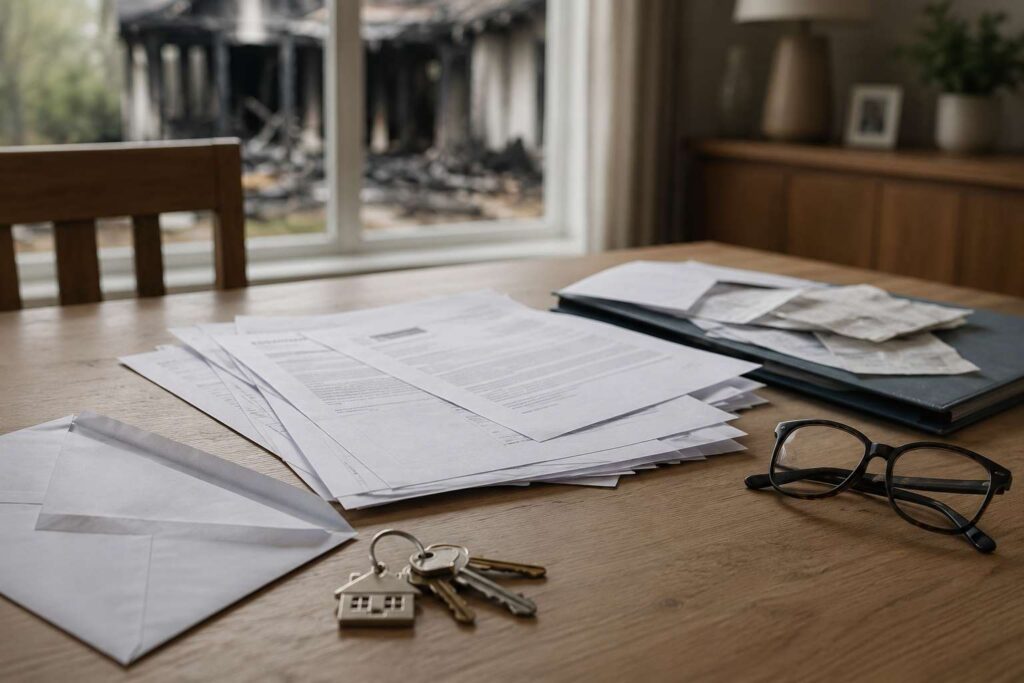
A house fire is already overwhelming. After dealing with damage, displacement, and the stress of recovery, many homeowners expect their insurance policy to provide some level of stability. When that does not happen, the situation can quickly become more complicated.
A denied or underpaid claim often raises new questions about coverage, documentation, and next steps. If you are trying to figure out what to do if insurance won’t pay for fire damage, it helps to understand how these decisions are made and what options may still be available under Washington law. Contact us by calling us at (509) 315-4219 to schedule a confidential consultation.
💡 Key Takeaways
- A denial is not always the end: A denied fire claim does not always mean it lacks merit, since it often reflects how information was presented or interpreted rather than a lack of coverage.
- Start with the denial letter: Review it closely to see whether the issue involves missing documentation, a policy interpretation dispute, or a disagreement over the value of the loss.
- Strengthen the claim with evidence: Independent repair estimates, photographs of the full damage, and proof of ownership can address gaps and give the insurer a more complete picture.
- Appeal before escalating: Many carriers offer an internal review where updated documentation and clarification of policy provisions can resolve misunderstandings without litigation.
- Washington law protects policyholders: Insurers must investigate reasonably and act in good faith, and KND Law can review both the policy and the claims process to help you understand your options.
When a Fire Claim Stalls or Stops
Insurance claims involving fire damage are often complex. They may involve structural loss, smoke damage, and personal property, all evaluated under specific policy terms.
Disputes can arise when there is disagreement about coverage, valuation, or the cause of the fire. A denial does not always mean the claim lacks merit. In many cases, it reflects how the information was presented or interpreted.
What Typically Leads to a Denial
Insurance carriers rely on documentation and policy language when evaluating claims. Certain issues tend to appear repeatedly when a claim is delayed or denied.
Common causes include:
- Unclear or disputed origin of the fire,
- Differences in property valuation estimates,
- Policy exclusions that limit coverage, and
- Incomplete or inconsistent claim documentation.
When facing a denied fire damage insurance claim, the insurer’s explanation often highlights one of these concerns.
Understanding the Insurance Company’s Decision
Insurers are required under Washington law to conduct a reasonable investigation and handle claims fairly. However, disagreements still occur over how evidence is interpreted or whether the investigation was complete.
It is important to carefully review the denial letter. It often identifies whether the issue involves missing documentation, a policy interpretation dispute, or disagreement over the value of the loss. Understanding the reasoning behind the decision is the first step in determining how to respond.
Strengthening a Fire Damage Claim
In many cases, additional documentation can help clarify or support a claim. Insurance companies depend on evidence, so a more complete record may help resolve disputes.
Helpful actions to take after a denial may include:
- Obtaining independent repair estimates from qualified contractors,
- Gathering photographs that show the full extent of the damage,
- Collecting receipts or proof of ownership for damaged property, and
- Requesting clarification from the insurer regarding missing information.
These efforts can address gaps and provide a more detailed picture of the loss.
How to Appeal a Fire Insurance Claim
Some disputes can be resolved through an internal review process. Learning how to appeal a fire insurance claim can provide an opportunity to correct issues without escalation.
An appeal typically involves submitting additional documentation and explaining why the original decision should be reconsidered. This may include updated estimates, expert input, or clarification of policy provisions. The goal is to correct missing information or resolve misunderstandings that may have influenced the initial decision.
When a Fire Insurance Dispute Escalates
If an appeal does not resolve the issue, the focus may shift to how the claim was handled and whether legal protections apply under Washington law.
Insurance companies must act in good faith and deal fairly with policyholders. This includes conducting a reasonable investigation and properly evaluating submitted evidence. When disputes arise, they may involve potential breach of contract claims, insurance bad faith, or violations of consumer protection laws.
At this stage, the issue is not just the denial itself, but whether the insurer properly handled the claim from start to finish.
What to Look for in the Insurance Company’s Response
Certain patterns may raise questions about how the claim was handled, including:
- Unclear or changing explanations for the denial,
- Delays in communication without a clear reason,
- Failure to address submitted documentation, and
- Reliance on incomplete or limited investigation.
These factors do not automatically mean wrongdoing occurred, but they may be relevant when evaluating whether the claim was properly handled.
Suing Your Insurance Company for Fire Damage
When a claim remains unresolved after reasonable efforts, some individuals consider suing the insurance company for fire damage. This step typically comes only after reviewing the insurer’s reasoning, submitting appropriate supporting documentation, and exploring all internal appeal options.
A legal claim may involve examining:
- Whether the insurance company conducted a timely and thorough investigation,
- How policy language was applied to the specific loss,
- Whether all supporting materials were properly considered, and
- Whether communications were clear and consistent throughout the process.
Depending on the circumstances, claims may involve breach of contract, insurance bad faith, or consumer protection issues under Washington law.
How Washington Law Addresses Fire Insurance Disputes
Washington law requires insurers to handle claims fairly and act in good faith. Unfair claims handling practices are regulated under state administrative rules. In some cases, disputes may also involve the Washington Consumer Protection Act, which addresses unfair or deceptive business practices.
These laws do not apply to every denied claim. However, they provide important protections when an insurer fails to properly investigate or evaluate a loss.
Why Timing and Organization Matter
When your fire damage insurance claim is denied, what to do next can seem murky. But it’s critical not to be paralyzed with uncertainty. Prompt action can help preserve important information and avoid unnecessary complications. Delays may make it more difficult to gather evidence or respond effectively to the insurer’s concerns.
Maintaining organized records supports a more consistent claim. Documentation of communications, estimates, and damages can help clarify the situation if questions arise later.
A structured approach often leads to better outcomes when disputes occur.
How KND Law Reviews Fire Damage Claim Disputes
KND Law evaluates fire damage disputes by examining both the policy and how the claim was handled. Each case is reviewed based on its specific facts rather than assumptions.
Our attorneys work with clients to gather documentation, assess insurer communications, and identify potential next steps. While some disputes are resolved through negotiation, others require litigation, and we prepare each case accordingly.
Washington Fire Insurance Attorneys
If you are trying to understand what to do if insurance won’t pay for fire damage, KND Law can help you evaluate your situation and explore your options under Washington law. Our team of award-winning attorneys focuses on careful case analysis, clear communication, and trial-ready preparation when needed. Speaking with our team may help you move forward with greater clarity and confidence.
Contact our office today at (509) 315-4219 to schedule a confidential consultation and learn more about how we can help.
Frequently Asked Questions
Why Would Insurance Not Pay for Fire Damage?
Fire damage claims are often denied or underpaid for a handful of common reasons, including an unclear or disputed origin of the fire, differences in property valuation, policy exclusions that limit coverage, and incomplete or inconsistent documentation. A denial does not always mean the claim lacks merit, so reviewing the insurer’s stated reason is the first step in deciding how to respond.
How Do I Appeal a Denied Fire Insurance Claim?
Most carriers offer an internal review process where you can submit additional documentation and explain why the original decision should be reconsidered. An appeal may include updated repair estimates, expert input, or clarification of policy provisions. The goal is to correct missing information or resolve misunderstandings that influenced the initial decision.
What Evidence Do I Need to Support a Fire Damage Claim?
Helpful evidence includes independent repair estimates from qualified contractors, photographs showing the full extent of the damage, and receipts or proof of ownership for damaged property. Requesting clarification from the insurer about any missing information can also help. A more complete record gives the insurer a clearer picture of the loss and can help resolve disputes.
Can I Sue My Insurance Company for Denying a Fire Claim?
Yes, when a claim remains unresolved after reasonable efforts, some individuals consider legal action, but this step typically comes only after reviewing the insurer’s reasoning, submitting supporting documentation, and exhausting internal appeals. Depending on the circumstances, a claim may involve breach of contract, insurance bad faith, or consumer protection issues under Washington law.
How Long Do I Have to Dispute a Fire Insurance Denial?
Prompt action matters, because delays may make it harder to gather evidence or respond effectively to the insurer’s concerns. Acting quickly helps preserve important information and avoid unnecessary complications. Specific time limits depend on your policy and applicable law, so it is worth confirming the deadlines that apply to your situation.
What Does Bad Faith Mean in a Fire Insurance Dispute?
Bad faith refers to an insurer failing to handle a claim fairly, such as not conducting a reasonable investigation, failing to address submitted documentation, or giving unclear or changing explanations for a denial. Washington law requires insurers to act in good faith with policyholders. These factors do not automatically mean wrongdoing occurred, but they may be relevant when evaluating how a claim was handled.
Official Legal and Other Sources
To ensure the accuracy and clarity of this page, we referenced official legal resources during the content development process: